

Documenta Madrid, the International Documentary Film Festival organized by the Department of Culture, Tourism, and Sports, will hold its 23rd edition from May 26 to 31, with Cineteca Madrid serving as the main venue and a program that will also extend to the Spanish Film Archive, the Reina Sofía National Art Museum, La Casa Encendida, and the Goethe-Institut.
Under the artistic direction of Luis E. Parés, who is also the artistic director of Cineteca Madrid, the festival continues to build upon the curatorial approach developed in recent editions. The programming committee is composed of Nuria Cubas, Pablo Caldera, Irene Castro, and Florencia de Múgica, who, together with Parés, have crafted a program characterized by a focus on auteur documentary film, the promotion of Spanish cinema, and a dialogue with the history of cinema.
“Taking the Pulse”: Direct Cinema as a Lens on the Present
The 2026 edition is structured around the concept “Taking the Pulse,” a thematic focus that celebrates the tradition of direct cinema and its ability to capture social and cultural reality in real time. Although this approach has a long history in documentary filmmaking, in recent years it had been partially supplanted by more essayistic forms. However, in the face of the turbulence of the current historical context, numerous filmmakers have returned to the streets to film, without mediation, what is happening around them. This approach will also be previewed in Cineteca Madrid’s regular programming during the month of May, which will host a special series aimed at expanding on some of the festival’s themes.
Opening and Closing: A Dialogue Between Memory and the Present
The opening session will present Rivisitazione dello sciopero, an audiovisual experience based on the unfinished documentary that Pier Paolo Pasolini dedicated to the first street sweepers’ strike in Italy in 1970. The original materials from the project—which had been lost for decades—were recovered in 2005, although the sound recording was lost forever. Using these silent images, artists Cosimo Terlizzi and Luca Maria Baldini create a live performance that transforms the original material into a contemporary event.
The festival will close with the premiere of Vial Matadero, a previously unreleased film by filmmaker Juan Cavestany, created specifically for this edition and produced by Matadero Madrid and Cineteca Madrid. The film offers a perspective on Matadero as a symbolic space of urban and social transformation, turning this cultural hub into a mirror of the city’s changes.
Competitions: Promoting Contemporary Cinema
The festival will retain its three main competitive sections: the International Competition, open to feature-length and short documentaries not previously screened in Madrid; the National Competition, dedicated to works produced or directed in Spain; and Corte Final, a section focused on Spanish films in the advanced stages of editing. In total, Documenta Madrid will award 36,000 euros in prizes, including the Jury Prizes for Best International and Best National Film, the Fugas Prize for Innovation, the Cineteca Madrid Audience Award, the CineZeta Youth Prize, and the Final Cut Prize. Added to this is the Agencia Freak Distribution Award, valued at 6,000 euros, consisting of the creation of production archives for the winning film, as well as its distribution at festivals for two years.
Perspectives that capture their time in retrospectives and special programs
The parallel sections constitute one of the central elements of the festival’s identity. This edition will also be marked by a reflection on cinema as a direct record of its time. Filmoteca Española (Spanish Film Archive) will host a series dedicated to the American collective Third World Newsreel, a militant film movement founded in the late 1960s that documented social struggles from within, such as the student movement, Black Power, feminism, and protests against the Vietnam War.
La Casa Encendida will host a retrospective dedicated to British filmmaker Charlie Shackleton, one of the most distinctive voices in contemporary non-fiction cinema, whose work explores the mechanisms of documentary storytelling with humor and formal experimentation in films such as Beyond Clueless, The Afterlight, and Zodiac Killer Project.
In collaboration with the Museo Nacional Reina Sofía, Documenta Madrid will present a retrospective dedicated to Chilean filmmaker Marilú Mallet, a pioneer of the autobiographical documentary and one of the first women to establish her own filmography within Chilean cinema, with films such as Andahuaylillas and El evangelio en Solentiname. For its part, the ECAM Encounter will be dedicated to German filmmaker Jan Soldat and will take place at Cineteca Madrid, the Goethe-Institut, and ECAM, featuring screenings and a masterclass that will offer insight into a body of work that explores intimacy, the body, and power dynamics in contemporary society.
The festival will also present the program A Hidden Avant-Garde: Slovenian Experimental Cinema, curated by Matevž Jerman and Jerca Jerič in collaboration with the Slovenian Cinematheque, which brings to light little-known works by figures such as Vinko Rozman, Karpo Godina, and Vasko Pregelj. Among the special screenings is The Adventures of a Lumière Cameraman Around the World, in which filmmaker Javier Rebollo will provide live commentary on a selection of films shot by Lumière cameraman Gabriel Veyre, one of the first filmmakers to shoot in different countries around the world in the late 19th century. In addition, in collaboration with the ECAM Archive, the festival will present previously unseen footage by TVE cameraman assistant and Kappa Press Photo correspondent José Luis de Pablos, a firsthand witness to some of the major political and social events of the second half of the 20th century.
Documenta Pro and Festival Activities
The festival program will be complemented by Documenta Pro, the professional gathering organized in collaboration with Madrid Film Office, which—for the fourth consecutive year—will bring together filmmakers, producers, programmers, and industry professionals to discuss the challenges facing contemporary documentary filmmaking and its production and distribution models. In addition, the festival will host workshops and educational activities such as “Instructions for Dreaming Up a Collective Film,” led by the Espíritu Escalera collective, a creative lab aimed at young people that proposes working with personal images and audiovisual materials to build a collective cinematic work.
“Constelación Cineteca”
As in previous editions, the ‘Constelación Cineteca’ program will strengthen the dialogue between Documenta Madrid and other creative spaces at Matadero Madrid, such as Medialab, Intermediae, and the Center for Artist Residencies. Through screenings, meetings, and project presentations, these collaborations will expand the festival’s reach and connect documentary film with other contemporary artistic practices.
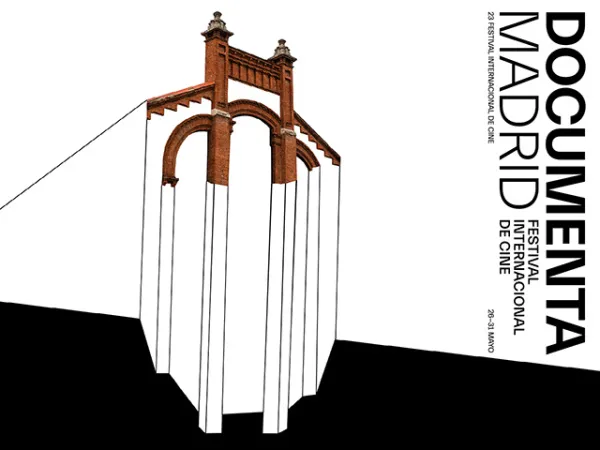
Visual identity by Nicolás Combarro
The visual identity for this edition was created by photographer Nicolás Combarro (A Coruña, 1979), one of the most renowned artists of his generation, whose work lies at the intersection of architecture, memory, and the history of spaces. Combarro has developed a visual project centered on Matadero Madrid, the festival’s main venue, exploring its dual nature as a place of memory and a space for contemporary creation. His work thus engages in a dialogue with Juan Cavestany’s film Vial Matadero, establishing a link between the still image and the cinematic gaze on this cultural enclave of the city.
An internationally renowned jury
This year’s jury will be composed of prestigious professionals from the fields of film, programming, and criticism. In the National Competition: Hélder Beja, director of Doclisboa; Maite Conesa, director of the Filmoteca de Castilla y León; and Iris Martín-Peralta, curator and film producer. In the International Competition: Argentine-British filmmaker Jessica Sarah Rinland; Laura García Lorca, director of the Fundación Federico García Lorca; and Christophe Piette, programmer at CINEMATEK, the Royal Film Archive of Belgium. In addition, the Corte Final section will feature a jury composed of producer Rocío Cabrera; Aimar Arriola, head of the Intermediae program at Matadero Madrid; and Joan Sala, programmer at Filmin and deputy director of the Atlántida Mallorca Film Fest.
With this new edition, Documenta Madrid once again positions documentary film as a privileged tool for observing the world in real time, offering a direct look at the tensions, transformations, and narratives of the present, and asserting film as a form of immediate record of reality and as a space for collectively reflecting on our times.
More info: documentamadrid.com
Press contact for interviews: prensa@documentamadrid.com

 DocumentaMadrid