

It’s clear that we’re living in strange times and that we’re all feeling a sense of uncertainty. No one dares to predict what will happen in a month’s time, and predictions always amount to nothing more than guesswork. A year ago, no one could have imagined that the world would be in the state it is today. We could say that we have lost the ability to predict the future, to understand the path we were going to take. But perhaps that isn't the worst of the symptoms. What is far worse is that we have lost the ability to make sense of the present — the moment in which we live, and of which we form part.
That is why we need to return to documentary film. No form of expression has been able to capture the pulse of history quite like the documentary; to understand, in real time, what was happening. Suddenly, documentary filmmaking presents itself once again as the most effective tool for getting out onto the street and understanding what is happening. Non-fiction helps us to regain a sense of perspective on moments from which we cannot step back: our own times.
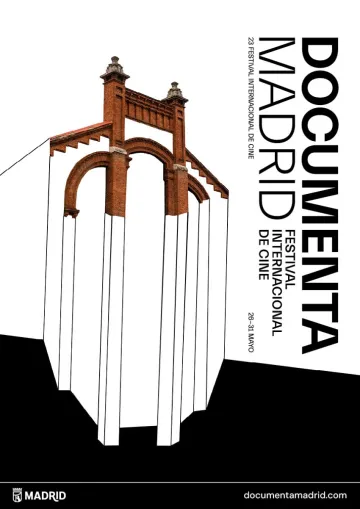
That is why this edition of Documenta Madrid has been conceived under the philosophy of ‘Taking the Pulse’. We have to be able to understand the world around us once again, and documentary film is a valid tool to do so. Therefore, we once again draw on the example of Pasolini. In 1970, he took to the streets of Rome to understand the reasons behind a strike that was on the verge of bringing the city to a standstill, in previously unseen footage that we have recovered for this edition. We also turn to little-known Slovenian experimental cinema, which sought to express its resistance to the regime from the fringes of artistic practice. Or we turn to the previously unseen work of a TV correspondent, José Luis de Pablos. The reporter sought to bear witness to everything he saw that never made it into the news. And for this reason, we invited Juan Cavestany, the filmmaker who has best understood our city, to portray the space of Matadero and Cineteca Madrid, revealing all the life that bustles around us and that we do not always perceive. We will also be welcoming Marilú Mallet, a chronicler of the Chilean people’s exile, and Charlie Shackleton, who demonstrates how cinema today is created using a thousand different formats.
But above all, what we have sought with this edition is to show that organising a festival also means embracing a diversity of perspectives, origins, backgrounds and sensibilities. Now, more than ever, we must demonstrate that there are a thousand different ways of being present. We are therefore delighted to be able to present a new edition of Documenta Madrid that demonstrates our commitment to building a better city — for the citizens of today and for those yet to come.
Luis E. Parés
Artistic director of Cineteca Madrid
Florencia de Mugica, Nuria Cubas, Irene Castro, Pablo Caldera.
Programming commitee of Documenta Madrid 2026

 DocumentaMadrid